Image via the NBA
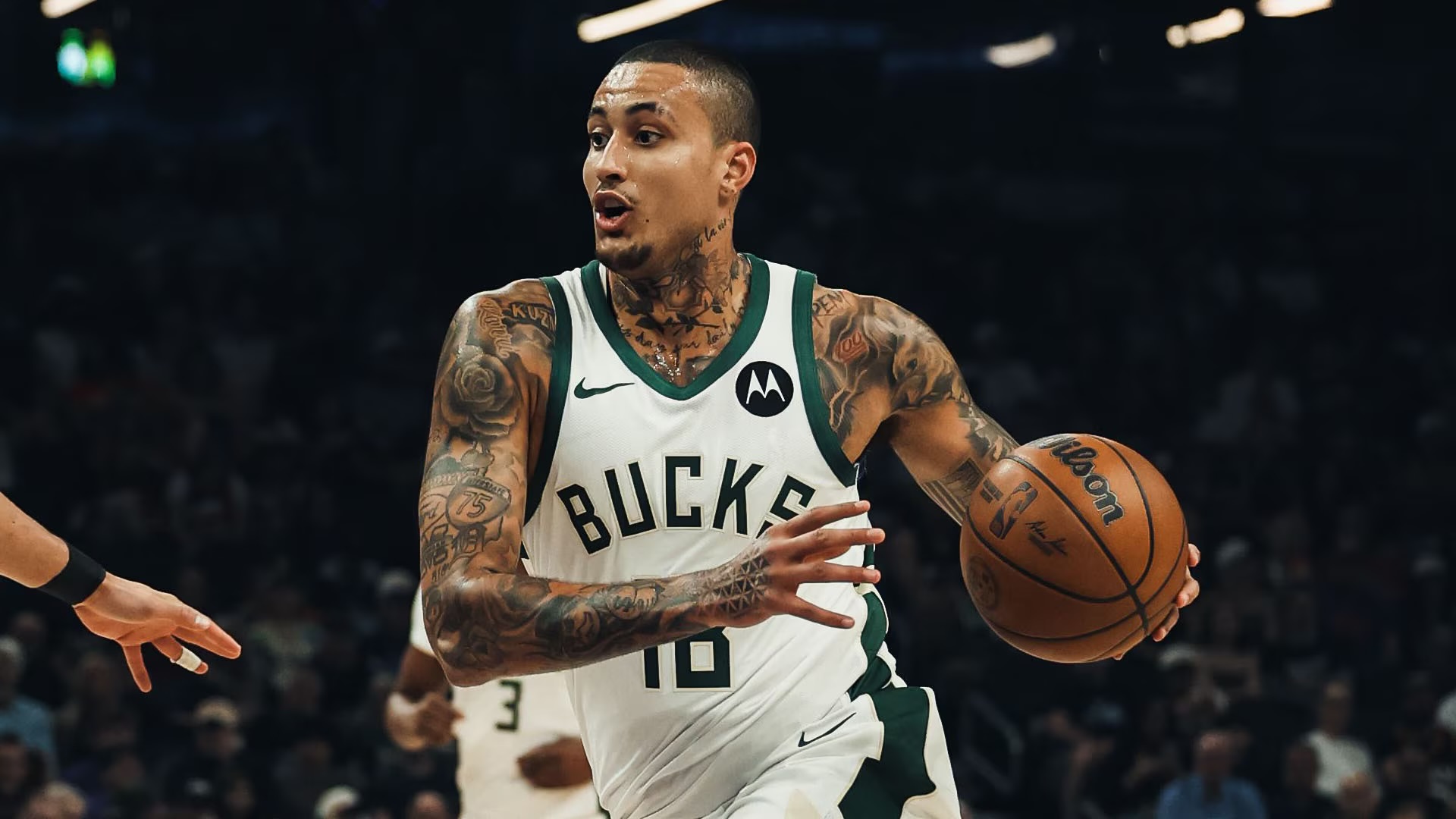
The NBA’s new Collective Bargaining Agreement was designed to promote competitive balance, but according to Milwaukee Bucks forward Kyle Kuzma, it has created unintended consequences that are reshaping the league in all the wrong ways.
In a candid post on X, Kuzma argued that the league’s first and second salary cap aprons have become far more restrictive than advertised, forcing organizations to prioritize financial flexibility over basketball success.
“The new CBA was sold as parity, but the first and second apron are starting to function like a hard cap on player value, team continuity, and player movement.”
Kuzma believes the ripple effects have become increasingly evident during the past two offseasons. Teams are allowing productive players to walk, championship-caliber cores are being dismantled, and organizations are making roster decisions based less on talent and more on avoiding the harsh penalties associated with exceeding the salary cap aprons.
In his view, that shift ultimately hurts everyone involved.
“Teams are no longer making purely basketball decisions. They’re making fear-based apron decisions. That means good players get squeezed, homegrown cores get broken up, fan-favorite teams lose their identity, and the overall product loses some of the nostalgia and continuity that made people fall in love with the NBA in the first place.”
The veteran forward also challenged the effectiveness of the National Basketball Players Association, and for good reason, during negotiations. Kuzma emphasized that players understand the business side of the league but questioned whether they are being represented with the same level of preparation and expertise as NBA ownership.
He pointed to the league’s negotiating teams—comprised of experienced attorneys, economists, salary cap specialists, and business strategists—and argued that the players’ union must match that level of sophistication if it hopes to protect players’ long-term interests.
“Players deserve a PA that is just as sharp, just as prepared, and just as aggressive about protecting our upside.”
Kuzma also expressed concern that many players are simply informed of major decisions after agreements have already been reached rather than being fully educated throughout the negotiation process.
Looking ahead, Kuzma described the next round of collective bargaining negotiations as a defining moment for NBA players.
“The next CBA is a do or die moment for us as players.”
He called for greater transparency, accountability, and a thorough evaluation of the union’s leadership and negotiating strategy before the current agreement expires.
What Kuzma’s Comments Mean
Kuzma’s remarks echo concerns that have grown louder across the league since the implementation of the new CBA. While the revised system has succeeded in discouraging excessive spending by high-payroll franchises, it has also made it significantly more difficult for contenders to retain championship-caliber rosters.
Recent offseasons have featured numerous salary-cap-driven trades, veterans accepting below-market contracts, and contenders breaking apart proven cores simply to avoid the financial and roster-building restrictions tied to the second apron.
Whether those outcomes represent healthy competitive balance or an overcorrection remains a subject of debate. What is becoming increasingly clear, however, is that more players are willing to publicly question whether the league’s current economic system is serving the interests of the players, franchises, and fans it was designed to benefit.